
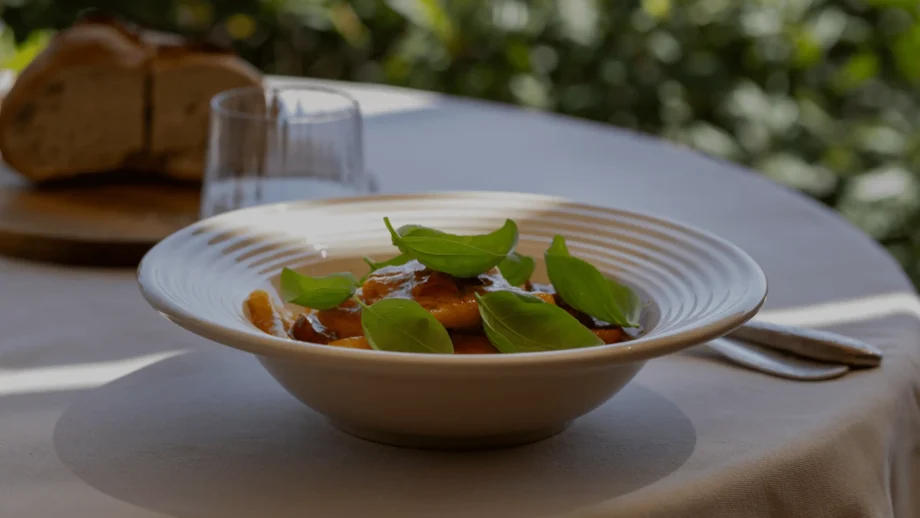
The easiest way to choose tableware is to start with the shape, because a small plate, a large plate and a pasta plate each change how the food sits in front of you. Color and collection matter too, but the shape decides how naturally the piece fits into the meals you actually cook.
Kaya makes handmade plates in three shapes, and the measurements are the quickest way to tell them apart.
| Shape | Size | Best for |
|---|---|---|
| Small plate | 20.5 cm (Saint-Tropez) or 22 cm (Basic) | breakfast, sides, dessert |
| Large plate | 25 cm (Basic) or 28 cm (Saint-Tropez) | main courses, hosting |
| Pasta plate | 26 cm wide, 6 cm deep | pasta, risotto, anything with sauce |
When to choose a small plate
A small plate ends up being one of the most used pieces in a kitchen, since it handles breakfast, snacks, bread, fruit, dessert and side dishes without any of them looking lost. At 20.5 or 22 cm it also works as the upper layer on a dinner plate when you want the table to feel composed.
Choose small plates if you want:
- everyday flexibility
- plates for breakfast and snacks
- side plates for dinners
- a lighter table setting
- pieces that get used several times a day
Small plates are easy to underestimate and often turn out to be the ones you reach for most.
When to choose a large plate
A large plate is the foundation of any set, and if you’re buying handmade ceramics for the first time this is the practical place to start. The Basic version is 25 cm, the Saint-Tropez is 28 cm, and the difference is noticeable when you plate a main course with something alongside it.
Choose large plates if you want:
- a core plate for daily meals
- enough room for composed dishes
- a stronger visual base on the table
- pieces that work for both weekdays and gatherings
The extra space also lets food breathe, which makes a simple dish look more considered than it would on a crowded plate.
When to choose a pasta plate
A pasta plate, also called a deep plate, is what you want when a flat plate feels too open and a bowl feels too closed in. Ours is 26 cm wide with 6 cm of depth, so there is room for sauce without the dish turning into soup.
Choose pasta plates if you often serve:
- pasta and risotto
- warm grain dishes
- sauced meals
- generous salads
- one-plate dinners
In a lot of homes this becomes the relaxed dinner piece, practical enough for a Tuesday and generous enough for company.
How the shapes work together
You don’t have to pick one. A set that covers most meals usually has large plates for main courses, small plates for breakfast and sides, and pasta plates for anything sauced, which gives you range without a cupboard full of specialist pieces.
Match the shape to the mood
Shape changes the atmosphere as much as the practicality. A large plate reads as open and composed, a small plate as casual, and a pasta plate as warmer and more generous, particularly for food served with sauce or passed around the table.
Handmade ceramics add to that, since the texture and weight register in the hand, and the raised lines on the Saint-Tropez pieces catch the light differently through the day.
Short Answer
Choose a large plate, 25 cm in Basic or 28 cm in Saint-Tropez, for main meals. Choose a small plate, 20.5 or 22 cm, for breakfast, snacks and side dishes. Choose a pasta plate, 26 cm wide and 6 cm deep, for pasta, risotto and sauced meals. The best everyday set usually combines all three.