
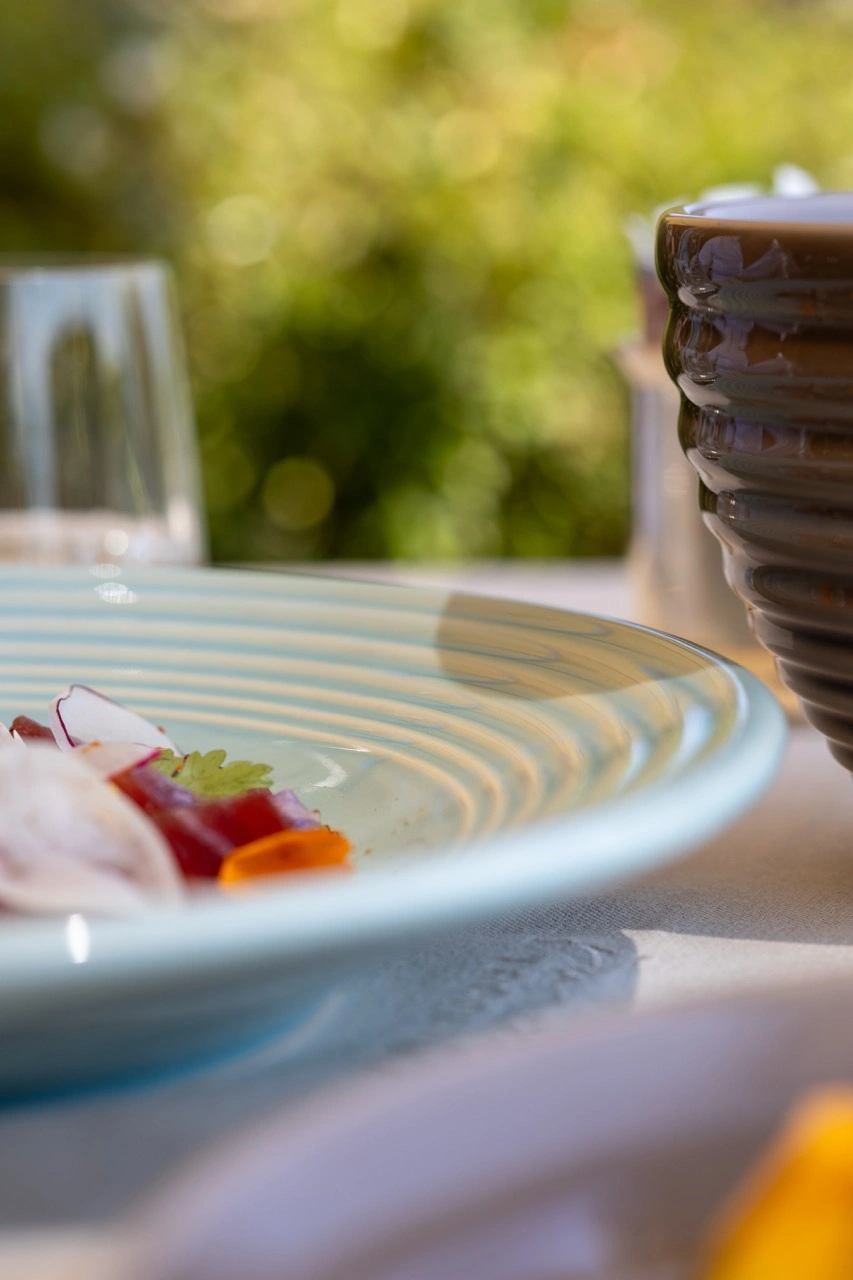
Handmade ceramics carry visible signs of the making process, so the surface, glaze, color and shape vary a little from one piece to the next. Mass-produced tableware is built to be identical, which is practical when you want a strictly uniform table, but it also means every plate tells you the same thing. A handmade plate has a surface you notice when you pick it up.
Natural variation is the clearest difference
In handmade pieces you can expect small differences in glaze, brushstroke, color and surface, and none of them make the object less refined. A glaze can settle more deeply on one plate than another, a brushstroke can show more clearly, a color can shift slightly in tone.
For Kaya Ceramics this is the point rather than a side effect. Every piece is shaped and hand-painted in Portugal and fired at approximately 1250°C, and that process leaves traces. A plate or bowl does more than hold food when it also shapes how the meal feels.
The surface is more present in the hand
Tableware gets handled constantly. You lift the mug, pass the bowl and set down the plate, and the weight and texture register every time. A Saint-Tropez Bowl weighs 649 grams and stands 10.5 cm tall, which gives it a grounded feel that a thinner factory bowl doesn’t have.
Mass-produced pieces are smooth and consistent, while handmade ceramics keep the raised lines, the glaze movement and the slightly uneven edge that come from being made by hand.
Handmade doesn’t mean fragile or decorative
A common assumption is that handmade ceramics belong in a cupboard you only open for guests, but Kaya’s range is built around weekday breakfasts as much as long dinners. Every piece is dishwasher and microwave safe, though never oven safe, so it can live in the cupboard you actually use.
That matters more than it sounds. Tableware you’re afraid to use stops being tableware.
Origin shapes the character
Kaya Ceramics is designed in Sweden and handmade in Portugal, with the Saint-Tropez Collection drawing its mood from the South of France. The combination gives the range Scandinavian clarity in the shapes and a warmer Mediterranean feeling in the glaze and color, which is why the pieces read as calm without reading as cold.
Handmade ceramics vs mass-produced tableware
Handmade ceramics:
- show natural variation in glaze, color and texture
- feel more present in the hand
- bring more character to the table
- suit tables where warmth matters more than symmetry
Mass-produced tableware:
- looks visually identical piece to piece
- is easier to replace one item at a time
- gives a more uniform table setting
- suits tables where strict consistency is the goal
Which one is right depends entirely on what you want the table to feel like, and both answers are reasonable.
Short Answer
Handmade ceramics differ from mass-produced tableware through natural variation in glaze and surface, a more tactile feel in the hand, and a more individual presence on the table. They remain practical everyday objects, and Kaya’s pieces are dishwasher and microwave safe, but they carry visible traces of being made by hand.